



Key Takeaways
- Sovereign AI keeps infrastructure, data, and models under an organization’s direct ownership and audit control.
- Public AI runs on a vendor’s infrastructure, so the vendor controls both access terms and system changes.
- Regulatory frameworks tied to Cybersecurity Maturity Model Certification (CMMC) and General Data Protection Regulation (GDPR) compliance increasingly require verifiable data sovereignty, not just residency.
- GPU-dense compute is what makes a data center AI-ready; organization ownership is what makes it sovereign.
- Operational resilience depends on whether an organization can keep AI running independent of a vendor’s uptime.
AI adoption is now a baseline requirement for defense, government, and critical infrastructure organizations. The deployment model behind that adoption determines whether an organization controls its own data or hands that control to a vendor.
Sovereign AI and public AI represent two different answers to the same question: who owns the infrastructure, data, and models behind an organization’s AI systems?
Security and technology leaders now have to weigh data control, compliance exposure, and operational resilience before choosing either path. Getting that choice wrong can mean rearchitecting an AI program from the ground up.
What Is Sovereign AI?
Sovereign AI is an AI deployment model where an organization owns and controls the infrastructure, data, and models it depends on, rather than routing them through a third-party vendor.
With a sovereign AI model, compute, storage, and model inference all remain inside a boundary the organization operates and audits directly. That boundary is about more than where data physically sits. Data residency addresses location, while sovereignty determines who controls the data and which jurisdiction’s laws govern it. Public AI is sovereign AI’s counterpart, and it draws that boundary in the opposite direction.
What Is Public AI?
Public AI is the default model behind most commercial tools, including Software-as-a-Service (SaaS) chatbots and cloud-hosted copilots.
With this AI deployment model, an organization accesses models, compute, and data processing through a third-party vendor’s shared, multi-tenant infrastructure. The vendor controls where inference runs, how data flows, and which policies govern the system, even when the organization sets access permissions. It’s also the model sovereign AI exists to replace in regulated environments.
Sovereign AI vs. Public AI: Key Differences
Security and technology leaders weighing sovereign AI against public AI are really comparing four factors: who controls the data, who owns the infrastructure, how each model holds up under compliance scrutiny, and how each performs when something goes wrong.
| Factor | Sovereign AI | Public AI |
| Infrastructure ownership | Organization owns or fully controls compute, storage, and networking | Vendor owns and operates the infrastructure; the organization licenses access |
| Data control | Data stays inside an organization-owned boundary; inference inputs and outputs never leave it | Data is processed on shared, multi-tenant vendor infrastructure and may be used to train or tune vendor models |
| Compliance posture | Built to support data residency and auditability requirements like CMMC and GDPR/Schrems II | Compliance depends on the vendor’s certifications and contractual commitments |
| Operational resilience | Continues operating independent of external API availability | Depends on vendor uptime. Outages or policy changes can halt operations |
Compliance is where the two models diverge most sharply for regulated industries. An organization running sovereign AI can demonstrate exactly where data lives and who accessed it, satisfying frameworks such as CMMC and GDPR’s Schrems II ruling (a 2020 EU court decision that invalidated standard transatlantic data transfer mechanisms and raised the bar for demonstrating data residency). Public AI shifts that burden onto vendor attestations, which regulators increasingly treat as insufficient on their own.
Resilience follows a similar pattern. Mission-critical operations that depend on a vendor’s API can stall during an outage or a sudden policy change. Sovereign infrastructure keeps functioning because the organization controls every layer it depends on.
How to Find Sovereign AI Tools for Common Tasks
Finding a sovereign AI tool starts from a different premise than a typical vendor evaluation. If an organization requires data to stay under its own control, public AI tools are disqualified by definition. The question isn’t which one wins a side-by-side comparison. Instead, it’s how to source, adapt, or build a tool that qualifies at all.
Security and technology leaders generally have three paths to a sovereign AI tool for a given task:
1. Identify existing sovereign AI tools
Vendors marketing “sovereign AI” or “sovereign-ready” products should be screened against the same factors that separate sovereign and public deployment models: data residency, model control, and auditability. Before you invest in a product, ensure that it’s actually a sovereign AI tool by confirming the following:
- Data residency: Data and inference never leave the organization’s boundary.
- Model control: The organization can audit, fine-tune, or replace the underlying model.
- Auditability: Every prompt, response, and tool call is logged under the organization’s own policies
For a deeper evaluation checklist covering agent permissions and audit logging, see our guide to building a sovereign AI deployment framework. To learn more about how to implement this in practice, see our Sovereign AI docs.
2. Bring a public AI tool in-house
Some public AI tools can be reconfigured to run inside a sovereign boundary via self-hosted deployment, on-premises inference, or a private model endpoint with no vendor telemetry. If a vendor can’t offer that configuration, the tool doesn’t qualify as sovereign, regardless of its compliance certifications.
3. Build a custom tool
Organizations with in-house DevSecOps capacity can build a task-specific tool on open or self-hosted models. This path takes longer to set up but gives full control over the model, the data pipeline, and the audit trail from day one.
Whichever path an organization takes, the goal is the same: keep data, inference, and audit logs inside a boundary the organization owns and operates.
FAQs
Can sovereign AI use commercial cloud infrastructure?
Yes. Sovereign AI can run on designated private cloud, on-premises, or air-gapped infrastructure, as long as the organization retains ownership and control over that environment.
Does sovereign AI mean air-gapped only?
No. Air-gapped deployment is one option within sovereign AI, typically reserved for the most sensitive workloads. Sovereign AI also includes private cloud and on-premises deployments that remain fully organization-controlled without full network isolation, giving security leaders flexibility to match deployment to risk level.
What is the difference between a sovereign AI data center and a traditional data center?
A sovereign AI data center differs from a traditional data center in ownership, not hardware. Both need GPU-dense compute for AI workloads, but only a sovereign AI data center runs entirely within an organization’s own jurisdictional and security boundary, rather than shared infrastructure hosted by an external cloud provider.
Mattermost: Built for Sovereign AI Deployment
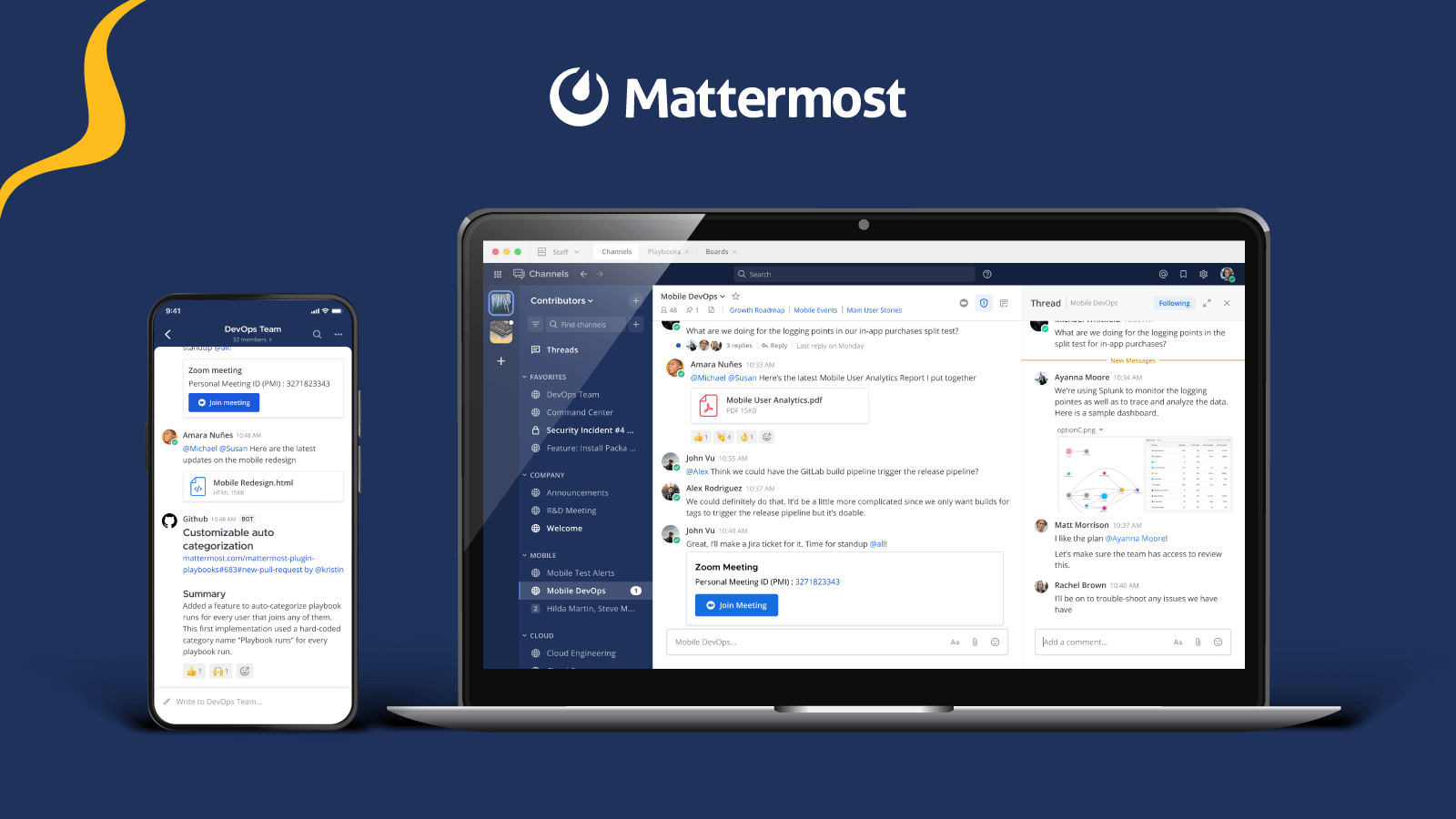
Mattermost is built for organizations that can’t afford to hand control to a vendor. It deploys fully self-hosted — including in air-gapped and DDIL environments — so model inference, message data, and audit logs never leave your security boundary.
Mattermost Agents supports bring-your-own LLM configurations using local models like Ollama and vLLM, or approved cloud providers, with no Mattermost access to customer environments.
For compliance-driven deployments, the platform includes FIPS 140-3 validated cryptography and STIG-hardened images approved for use in DoD environments.
Learn more about how Mattermost supports Sovereign AI deployment or contact our team to discuss your environment.