



AI adoption is accelerating across defense, government, and critical infrastructure, and organizations that delay are ceding operational ground to faster-moving adversaries. While most AI governance programs account for AI tools that teams formally procure, they tend to have a blind spot for the AI that ships as a feature update inside an already deployed and trusted collaboration platform. This blind spot is especially alarming, as sensitive operational data constantly flows through the collaboration layer.
When a vendor controls the AI reading that data, AI deployments are compromised at the point where work actually happens. Closing that gap requires a sovereign AI deployment framework that governs infrastructure, data, access controls, and the collaboration environment as a connected system.
What Is Sovereign AI?
At its core, sovereign AI is the ability to develop, deploy, and govern AI systems using infrastructure, data, and models that remain entirely under the organization’s control.
These sovereign AI systems must remain independent of externally-hosted platforms, third-party cloud services, or data governance policies defined by a vendor.
While most discussions of sovereign AI start and end with data residency (i.e., where data is stored and which laws apply), the underlying principles are broader. Five operational dimensions define what is sovereign AI in practice:
- Infrastructure sovereignty – control over where compute and model inference run
- Data sovereignty – ownership of where training data and inference inputs reside and flow
- Model sovereignty – control over who owns model weights, architecture, and updates
- Governance sovereignty – authority over whose policies govern AI behavior, transparency, and auditability
- Operational autonomy – the ability to continue operations independent of external APIs or services, even during vendor outages or geopolitical disruptions
Taken together, these dimensions require more than a data governance policy — they require a deliberate sovereignty posture that starts with infrastructure and models and extends through all operations.
The Overlooked Risk: AI Already Runs Inside Your Collaboration Stack
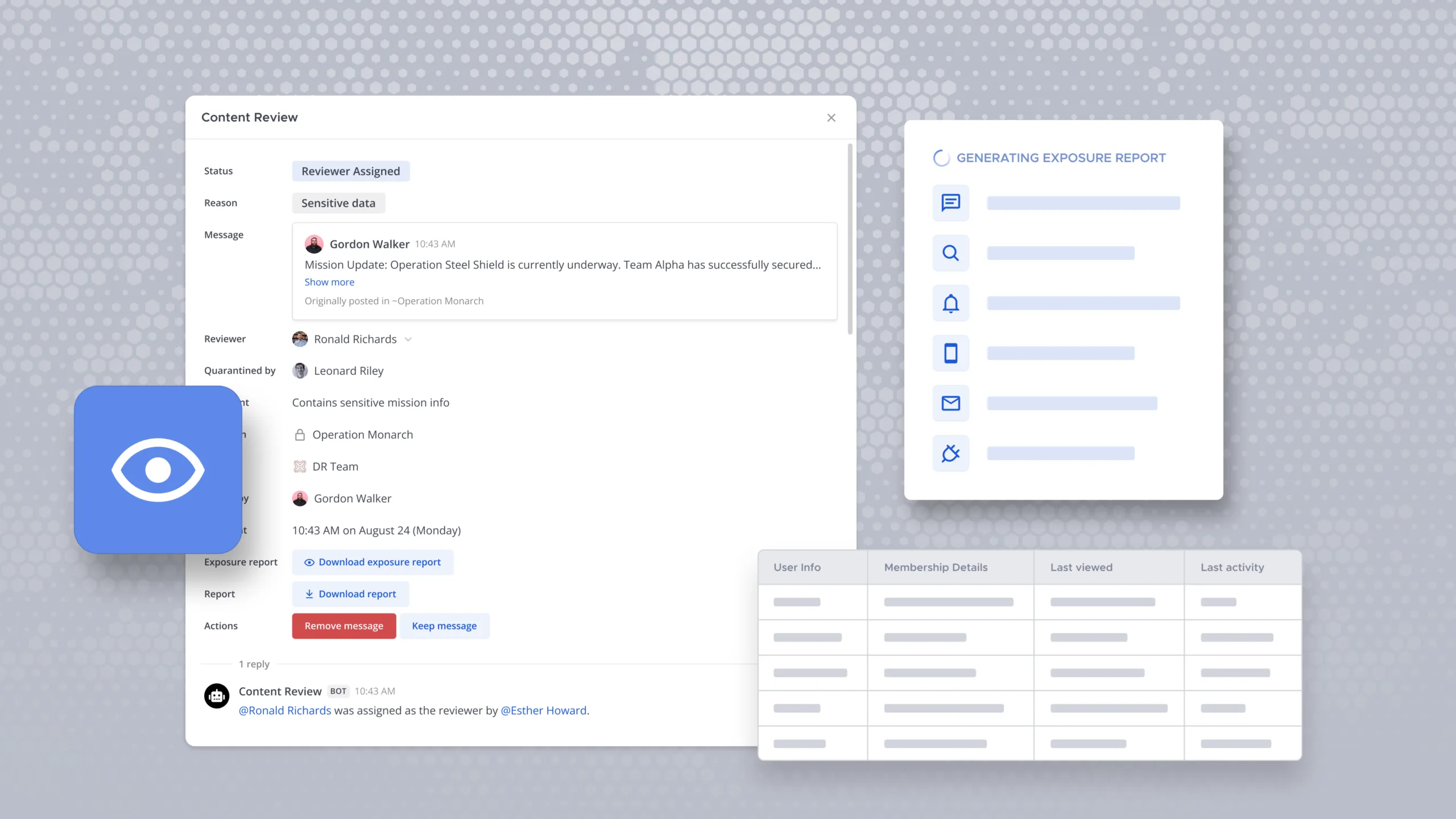
Over the past 18 months, major collaboration platforms have shipped AI features built on vendor-controlled infrastructure. For example, common AI features you’ll see on these platforms include thread summarization, smart search across channels and files, automated request routing, and real-time translation. Most of these features carry broad read permissions across channels, direct messages, and file attachments, running on infrastructure the customer does not control.
AI governance programs frequently miss vendor-embedded AI because it arrives as a new feature inside a platform already approved and deployed, rather than as a discrete tool requiring evaluation. By the time a governance team examines the environment, every sensitive thread the AI can reach has been processed by a model running outside the organization’s boundary, possibly triggering a data leakage incident
This exposure is a generative AI cybersecurity concern as much as a compliance failure. Multi-tenant SaaS collaboration platforms are high-value targets precisely because the operational data passing through them is what adversaries want to harvest.
Sovereign AI deployments are only as strong as the collaboration environment where that AI operates.
Emerging AI Cybersecurity Threats Organizations Must Address
Deploying generative AI in regulated, mission-critical environments introduces AI cybersecurity threats that require defenses purpose-built for AI systems. Each carries specific mitigation requirements, such as:
- Data poisoning: Adversaries corrupt training datasets to embed backdoors in AI models before deployment. Research shows that as few as 250 poisoned documents can successfully backdoor large language models regardless of model size, demonstrating that this attack is far more accessible than previously assumed. Since this attack targets the training pipeline rather than the runtime model, perimeter controls and prompt guardrails provide no protection. Mitigation requires strict data provenance tracking, validation controls on training and fine-tuning datasets, and behavioral anomaly detection on model outputs to catch drift.
- Prompt injection: External content retrieved by an AI agent, including documents, knowledge base entries, and partner portals, can steer model behavior in ways operators cannot easily detect. Every retrieval source connected to an AI system is part of the attack surface.
- AI agent lateral movement: An AI agent operating with broad permissions can traverse connected tools, APIs, and data stores after a compromise. This threat pattern travels via the agent’s granted permissions rather than exploited credentials. Constraining agents to operate under the invoking user’s permissions limits the blast radius of any given compromise.
- AI data exhaust: Forgotten vector databases, abandoned model repositories, and cached embeddings from AI experiments become breach vectors that standard asset inventories don’t capture. Sound risk management AI programs treat the full AI lifecycle, including decommissioning, as a security responsibility.
A Framework for Deploying Sovereign AI Securely
Addressing these AI cybersecurity threats requires more than selecting the right model or hardening a single system. To make this integrated approach a reality, review the following sovereign AI deployment framework:
1. Identify Sovereignty Requirements Before Selecting Tools or Architecture
Identify data residency needs, regulatory obligations — including the Cybersecurity Maturity Model Certification (CMMC), the Digital Operational Resilience Act (DORA), and applicable data privacy regulations — operational independence standards, and acceptable risk thresholds. These requirements drive every subsequent decision.
Organizations that build first and govern later consistently face structural gaps that require rearchitecting to close.
2. Categorize Data and Establish AI and Data Governance
Sovereign AI and data governance must extend beyond storage location to cover training inputs, inference inputs and outputs, model artifacts, retrieval sources, and audit logs.
Data categorization determines where data can live, who can access it, how long it is retained, and what disposal method is required at the end of the lifecycle.
3. Build Sovereign AI Infrastructure
Sovereign AI infrastructure means the full operational stack, including compute, model inference, the retrieval layer, the collaboration environment, and audit logging, operates within a boundary that the organization owns and controls.
On-premises, private cloud, or air-gapped deployment on a customer-operated control plane, with an open-source or source-available foundation that enables full supply chain verification, is the configuration that delivers genuine sovereignty.
4. Scope AI-Specific Access Controls
Role-based access controls (RBAC) and attribute-based access controls (ABAC) must extend to AI agents, not only users.
Look for platforms where agents are invoked with the calling user’s own delegated permissions rather than a separate elevated privilege surface. Note that agent permission scope may vary by context — confirm how the platform handles agent permissions in channels versus direct messages.
5. Build Comprehensive Audit Logging for All AI Interactions
Every prompt, response, tool call, and guardrail event should be logged, retained under the organization’s own policies, and auditable by the organization’s own security team. This logging layer is the evidentiary foundation that compliance frameworks, incident postmortems, and legal holds depend on.
When evaluating vendors, confirm whether audit logs are stored in a write-protected or append-only format that prevents modification after the fact — and that they are governed by the same access controls, residency requirements, and retention policies as your core operational data, since the logs themselves will contain sensitive information.
Selecting Sovereign AI Tools: What to Evaluate
When evaluating sovereign AI tools, including AI cybersecurity tools for detecting and mitigating AI-specific threats, the criteria that matter most go beyond model capability and price. The seven primary factors to look for in sovereign AI tools include:
- Infrastructure control: The AI must run inside infrastructure that the organization controls, with no vendor access to customer environments.
- Open-source or source-available core: The platform’s foundation should be fully auditable, enabling stack-level inspection and software supply chain verification. Mattermost’s server is available as open source, and critical infrastructure hardening includes SBOM-based supply chain verification.
- Agent-level access controls: RBAC and ABAC must extend to AI agents with granular administrative scoping by context and tool, not only to human users.
- MCP integration without external data routing: Model Context Protocol (MCP) support should connect agents to internal systems, including security information and event management (SIEM) platforms, CI/CD pipelines, and IT service management (ITSM) tools, without routing data through external services.
- Customer-owned audit logging: All AI interactions should produce logs retained under the organization’s own policies, with full retention control.
- Air-gapped deployment support: The platform should be deployable in fully disconnected environments for the most sensitive workloads.
- Multi-model flexibility: Both self-hosted open-source models and approved cloud-hosted options should be supported within the same AI data governance framework, avoiding vendor lock-in on model selection.
Selecting sovereign AI tools on capability and price alone, without verifying where the AI runs and whose policies govern its behavior, recreates the governance gap this framework is designed to close.
Mattermost: Sovereign AI Collaboration for Mission-Critical Environments
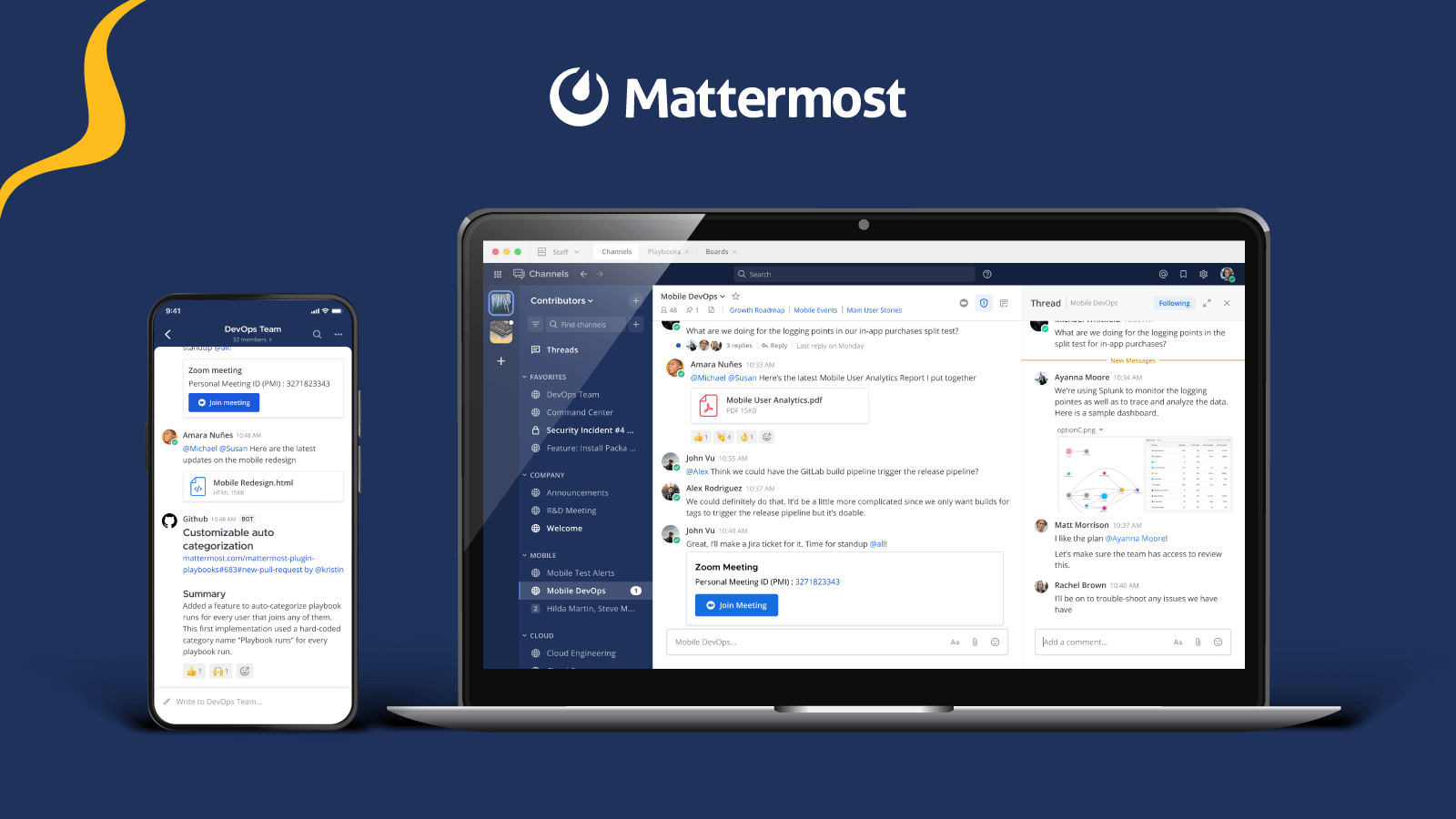
As a collaboration platform designed to support a secure sovereign AI deployment, Mattermost can be fully self-hosted — and when deployed self-hosted, operates entirely within customer-controlled infrastructure with no vendor access to customer environments.
Mattermost Agents runs model inference inside the customer’s sovereign boundary, supporting self-hosted open-source models and approved cloud options. ABAC gives administrators granular control over AI agent behavior and permissions. The Tool Policy Editor provides agent runtime controls that determine which tools require explicit approval, which are disabled entirely, and whether that varies by context — for example, direct message versus channel. All AI interactions produce customer-owned audit logs, and MCP integration connects agents to internal systems without data leaving the perimeter.
Learn more about how Mattermost supports sovereign AI collaboration for defense, government, and critical infrastructure organizations. To experience fully controlled, sovereign AI in action, sign up for a free trial today.