D-Day Was Planned on One Page: How Military Teams Can Overcome Information Overload
Transforming joint operations with real-time collaboration
Defense operations do not happen in a vacuum. Whether responding to a crisis, planning large-scale maneuvers, or executing missions in contested environments, success depends on how well different forces can work together.
Too often, outdated communication methods, incompatible systems, and organizational silos slow things down — sometimes with drastic consequences.
In a recent webinar focused on accelerating Joint Force decision-making, Nolan Schultz, U.S. Army Special Forces veteran and Account Executive at Mattermost, joined AJ Nash, former U.S. Air Force intelligence operative, to discuss shifts in the operational information environment. The discussion highlighted the increasing need for secure, interoperable collaboration platforms designed for mission-critical communication in joint operations.
The evolving information landscape in military operations
Did you know that D-Day was planned on a single sheet of paper?
Suffice it to say that a lot of complexity has been introduced into modern military planning.
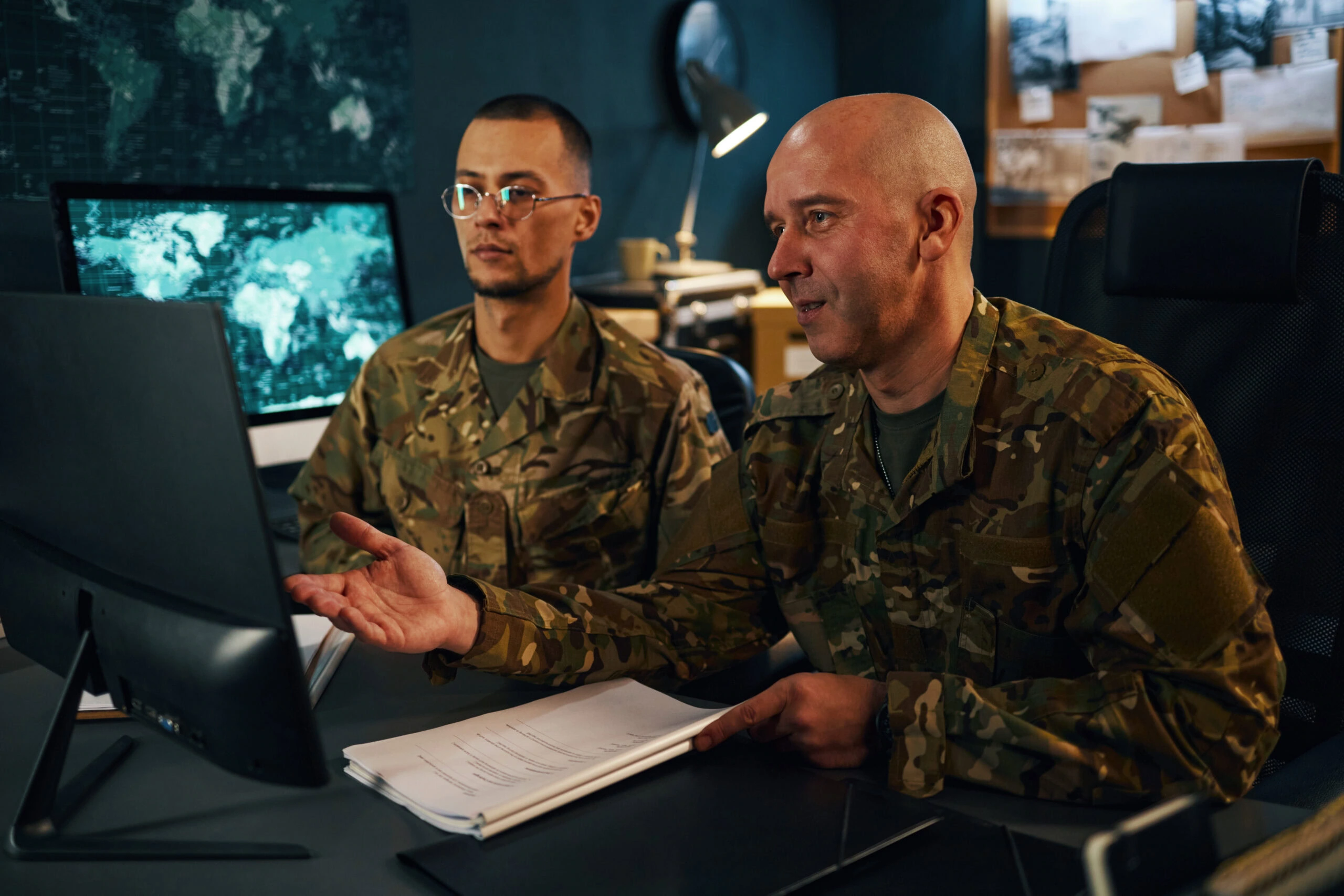
“Now, missions have 11-page concept of operations slides with 43 contingencies,” Schultz says. “I think what’s changed is the access to information but then also the amount of information we require to assume risk.”
While having tons more data to work with is certainly beneficial — more data helps you see the bigger picture — it opens opportunities for miscommunication and the challenges that come with it. If a battalion commander does not receive real-time update about enemy movement, for example, it could delay a critical maneuver — or worse, put lives at risk.
These communication gaps are not just about the volume of information. They are also deeply rooted in how the military adopts and implements technology.
“I think some of the barriers are just the evolution of technology in the military — I wasn’t around back then, but in the ‘70s and ‘80s, people thought, ‘Oh, the military’s very advanced,’” Schultz explains. “I would say that the military is still somewhat advanced, but they’re a laggard when it comes to technology compared to the commercial sector. A lot of that is requirements, policy, and laws around information sharing — what we can share, how our networks have to be designed.”
That gap becomes even more pronounced when different branches and agencies have to work together in the field.
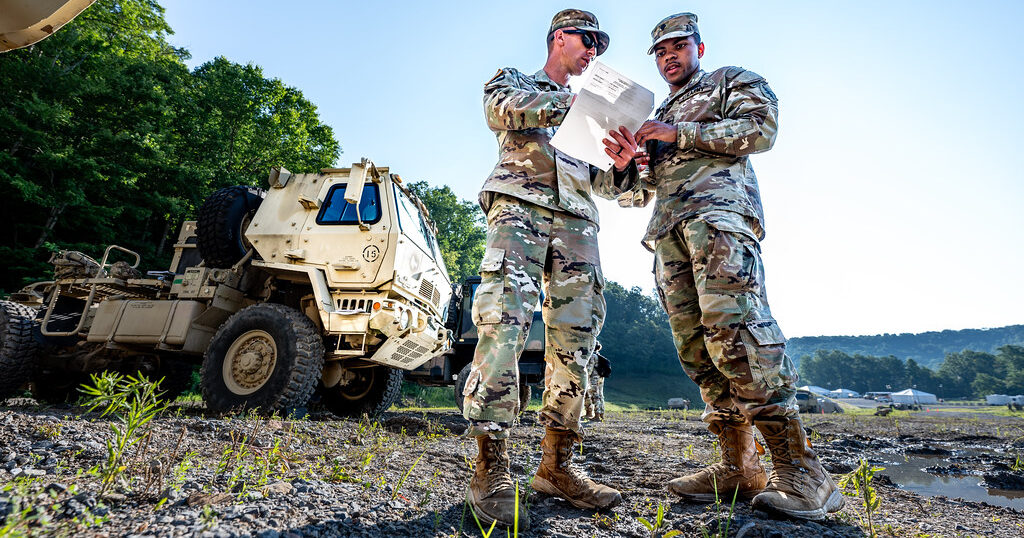
“Even when you get into true interagency joint environments, they run completely different communication stacks,” Schultz continues. “So, there’s a lot of on the ground, round-peg-square-hole fixing that has to be done just so we can conduct the operations.”
Some of these problems are patched on the fly; when bullets are flying, workarounds get fast-tracked. But relying on improvised fixes introduces serious risk, especially when soldiers are not trained on those tools or systems.
To illustrate, Schultz shared a personal experience from his deployment to Afghanistan under NATO Special Operations Command, which was using Battlefield Information Collection and Exploitation System (BICES) for communication at the time, a network known to be secure but often slow and cumbersome.
“You’d send an email, and 9 minutes later they’d get it,” Schultz says. “That constraint really caused us to just go direct. And we went direct on a common commercial off-the-shelf VoIP that you can download on your phone.”
While that workaround solved the immediate need for faster communication, it created new challenges — most notably, the inability to share classified information with mission partners over unsecured VoIP channels.
The need for centralized & secure real-time collaboration
During his time on active duty, Schultz juggled a range of communication tools every day — from sticky notes and emails to chat apps, phone calls, and even time in the Tactical Sensitive Compartmented Information Facility (T-SCIF). With so many disconnected systems in play, constant media switching was the norm — often at the expense of speed and decision advantage.
The way Schultz sees it, these problems can be solved by centralizing communication in a secure real-time platform that only authorized users can access.
“I think reducing the frivolous noise in between information and decision is really how we change the landscape,” he says. “People are going to do what they’ve got to do to win, so why not give them the tool that allows them to win, that adheres to policy, that protects information? And that’s why I choose to work at Mattermost. I think it’s one of the best solutions on the market that answers all of that holistically.”
To learn more about the communication challenges inherent in joint operations and how a secure real-time collaboration platform can help Joint Forces overcome them, watch the full webinar.