Signals in Sync: OSINT, HUMINT, SIGINT, GEOINT in the Modern Intelligence Environment
Why Intelligence Synchronisation Defines Modern Readiness
Intelligence has always been the foundation of operational advantage. Yet in today’s environment, the challenge is no longer access to information, but the ability to connect and act on it at speed.
Across agencies and alliances, the volume of available data has grown exponentially, but so too has the distance between those who collect it and those who must decide. The disciplines that once defined the intelligence landscape — open-source (OSINT), human (HUMINT), signals (SIGINT), and geospatial (GEOINT) — now operate in parallel, each rich in insight but often disconnected in application.
Modern intelligence readiness depends not only on collection but on synchronisation. The ability to bring disparate signals into a shared operational picture is now as decisive as any capability in the field.
The Signal Overload
The intelligence cycle has never moved faster. Open-source data floods in from social media, commercial satellites, and online communities. HUMINT continues to provide context and intent, but in smaller, more targeted volumes. SIGINT systems, meanwhile, operate at machine speed, generating streams of technical data far beyond human capacity to analyse in real time. GEOINT adds a vital spatial layer, mapping patterns, terrain, and movement to anchor insight in physical reality.
Individually, these sources provide clarity. Combined without structure, they create noise. Analysts face a growing burden of verification and prioritisation while decision-makers wait for validated insight. The result is a gap, not in intelligence, but in understanding.
Advantage depends on closing that gap before it translates into operational delay. Intelligence that cannot be connected, trusted, and acted on within minutes risks becoming irrelevant in a battlespace defined by velocity.
Aligning the Disciplines
Each intelligence discipline brings its own tempo and culture. OSINT thrives on speed and accessibility, but its credibility depends on validation. HUMINT requires time and discretion, shaped by trust and context. SIGINT delivers technical precision, but at the cost of overwhelming volume. GEOINT anchors intelligence in space and time, but its insights risk becoming static unless continuously correlated with live data and human context.
The challenge lies in aligning these streams without diminishing their strengths. That alignment is not purely technical; it requires interoperable workflows, shared situational awareness, and structured collaboration between collection, analysis, and command.
When human insight, open data, and technical collection operate in sync, the result is intelligence with both speed and depth. Decisions become faster, but not rushed. Confidence in outcomes increases, even under pressure.
Intelligence Without Continuity is Intelligence at Risk
The traditional intelligence cycle: direction, collection, processing, analysis, dissemination, and feedback, was designed for deliberate planning. Today, it must function as a continuous flow. In contested environments, disruption at any point in that cycle can fracture awareness and stall response.
Interruptions in connectivity, classification boundaries, or data handling processes often mean that insights stall before they reach the decision-maker. In intelligence, every pause creates uncertainty.
To maintain advantage, agencies need continuity across the entire cycle: direction that adapts in real time, collection plans that evolve dynamically, and dissemination channels that remain secure even when networks degrade. Continuity has become the true measure of intelligence resilience.
The Case for an Integrated Intelligence Backbone
Modern intelligence organisations require an operational backbone, a trusted environment that connects disciplines, aligns decisions, and preserves continuity under pressure.
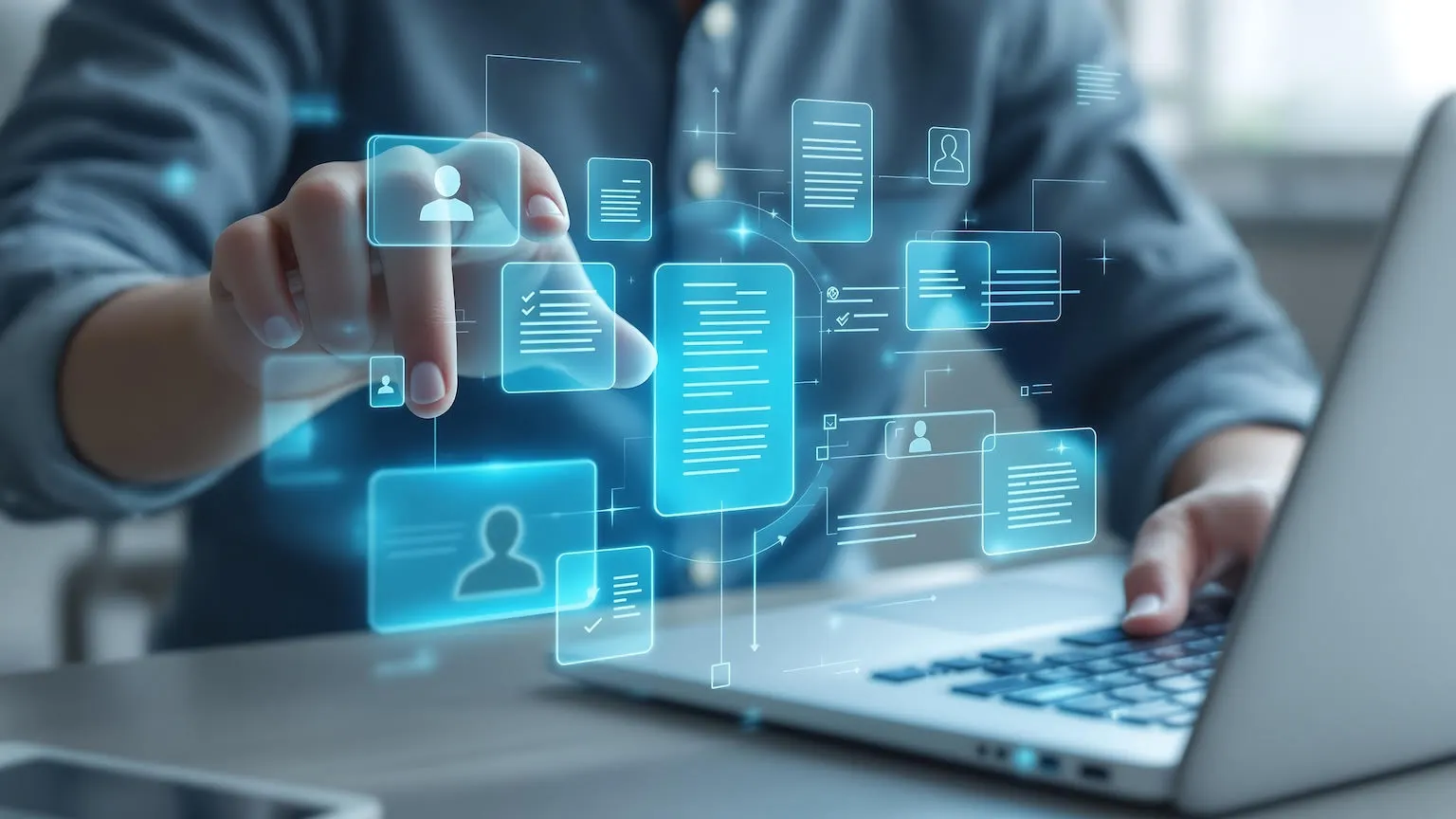
Such an environment does not replace existing tools or systems. It unifies them. It brings alerts, reports, and assessments from OSINT, HUMINT, SIGINT and GEOINT into
one secure space where analysts can collaborate, cross-reference, and decide without switching between fragmented systems.
By reducing context switching, agencies reduce the mean time to action. Analysts gain the ability to verify sources, track provenance, and fuse insights within the same workflow. Decision-makers receive validated intelligence faster, supported by auditability and transparency across the process.
For coalitions and allied agencies, this model offers an additional advantage: federated control. Each participant retains sovereignty over their data while contributing to a shared intelligence picture. This balance of autonomy and collaboration is the foundation of modern information superiority.
Maintaining Trust in an Automated Future
Artificial intelligence is reshaping the intelligence landscape, automating collection, triage, and even initial assessment. The opportunity lies not in replacing human judgment but in accelerating clarity.
AI can identify patterns across vast datasets, flag anomalies, and correlate signals from multiple domains. Yet its value depends on the environment in which it operates. Analysts must be able to interrogate, validate, and interpret machine outputs without losing the chain of accountability.
Human-machine collaboration must therefore be designed for transparency with every recommendation traceable and every action verifiable. This ensures that speed does not come at the expense of trust, and that automation strengthens, rather than weakens, the integrity of intelligence operations.
From Data Collection to Understanding
The evolution of intelligence is no longer about how much data can be gathered, but how effectively it can be understood. Agencies that can integrate collection, analysis, and dissemination within a unified, sovereign framework will move faster, decide sooner, and act with greater assurance.
OSINT, HUMINT, SIGINT, and GEOINT will continue to evolve independently, but their true value emerges only when they operate in harmony. When signals are in sync, information becomes understanding, and understanding becomes readiness.
The strength of modern intelligence lies in the continuity of insight: information that moves securely, collaboratively, and at the speed of relevance.
To see how secure, sovereign collaboration can bring your intelligence disciplines into one trusted environment and reduce mean time to action, access our one-hour preview environment.