

Wikimedia Deutschland chooses self-hosted Mattermost for secure collaboration and data sovereignty
“Since implementing Mattermost as our sole internal chat tool, we’ve seen a significant improvement in cross-team communications.”Timo Göttel Head of Internal IT, Wikimedia Deutschland
Highlights
- Moved to Mattermost to centralize communication
- Self-hosted Mattermost for data sovereignty and GDPR compliance
- Extended Mattermost with plugins to accelerate workflows
Integrations




In a media landscape driven by recurring subscriptions and paywalls, the international Wikimedia movement is committed to becoming the essential infrastructure of the ecosystem of free knowledge by 2030. Wikimedia’s global strategy is built on two pillars: knowledge as a service, becoming a platform that provides knowledge in various formats and building tools for allies, and knowledge equity, focusing on knowledge and communities that have so far been excluded by structures of power and privilege.
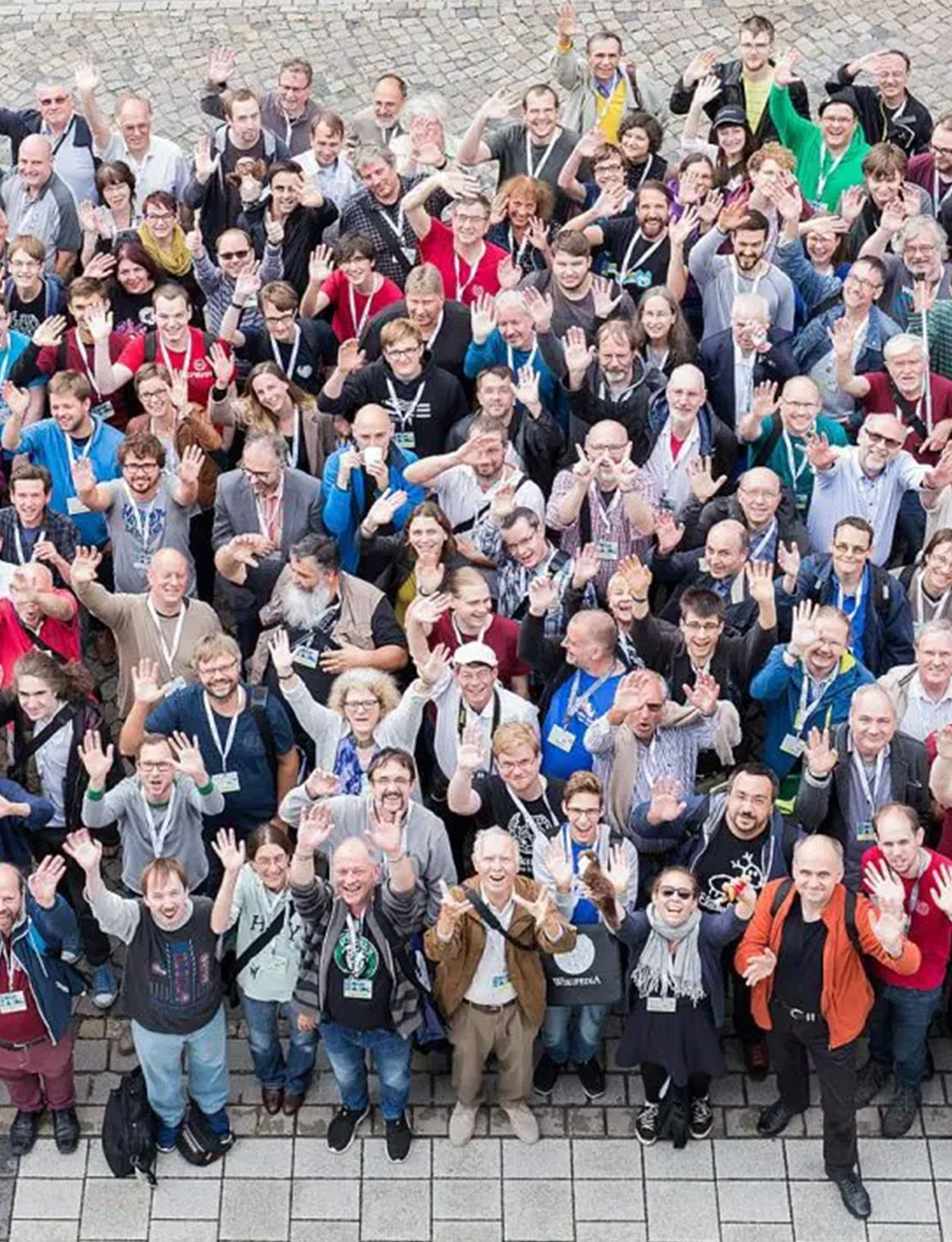
“Thousands of volunteers and nearly 200 Wikimedia chapters are working together to turn this vision into reality,” explains Timo Göttel, head of internal IT at Wikimedia Deutschland, a Wikimedia chapter founded in 2004. With over 100,000 members, the group is committed to helping achieve Wikimedia’s 2030 goals. “In doing so, we take responsibility here in Germany for ensuring that a democratically organized Wikimedia movement develops in a fair and sustainable way.”
Needing a central collaboration space to tie the community together
Wikimedia Deutschland is headquartered in Berlin, where its core team is based. The chapter also supports a global community of volunteers who contribute remotely to Wikimedia projects.
As Wikimedia Deutschland grew, the limitations of email and Google Chat became increasingly apparent. While both tools had their place — email was ideal for broadcasting announcements and Google Chat was great for quick conversations — neither offered the persistence and structure that a large, distributed team requires. The chapter needed a central collaboration platform to keep its community connected and aligned.
Choosing self-hosted Mattermost for ease of use and security
In 2017, Wikimedia Deutschland began evaluating secure collaboration solutions that were both easy to use and capable of protecting sensitive data. After considering several solutions, including Rocket.Chat and XMPP services, the team decided that Mattermost was the best fit for their needs.
“Mattermost stands out as the premier open source chat solution for internal communications,” Göttel continues. “Dependable, self-hosting options and a user-friendly NGO licensing model further enhance its appeal.”
By self-hosting Mattermost, Wikimedia Deutschland maintains complete data sovereignty — making it easier to ensure GDPR and Schrems II compliance.
Wikimedia Deutschland was also drawn to the platform’s “robust plugin system,” which allows the chapter to customize Mattermost “to meet the diverse needs” of its teams. In particular, HR uses the Remind plugin to stay on top of recurring events, developers use the GitHub plugin to track pull requests and code reviews, and staff members use Matterpoll to start quick polls without leaving the platform.
The team also cited Mattermost’s well-maintained repositories as a key factor, giving them confidence that security vulnerabilities are promptly identified and resolved.
Strengthening communication and building a stronger community committed to keeping knowledge free
Mattermost has become the central hub for day-to-day communication, complementing email for chapter-wide announcements.
“Since implementing Mattermost as our sole internal chat tool, we’ve seen a significant improvement in cross-team communications,” Göttel says. “We collaborate within and across teams, request assistance, conduct polls, send reminders, and share music, funny stories, and news about events, like an upcoming concert, which allows staff members to connect with like-minded colleagues over personal interests.”
Looking ahead, Wikimedia Deutschland plans to deepen its use of Mattermost’s plugin ecosystem to further streamline workflows across teams.
“There is still room for improvement in efficient communication patterns that can be addressed through Mattermost,” he explains, pointing to ongoing opportunities to deepen how the organization uses the platform.
Göttel currently recommends Mattermost to organizations interested in increasing team productivity and keeping sensitive data safe.
“We recommend self-hosting Mattermost for organizations that prioritize open source, data sovereignty, and strong usability,” he concludes.