



If you’ve worked in a coalition environment, you have probably experienced that moment when you are trying to coordinate across U.S., allied, and host-nation forces and the official systems won’t reach. That is because those systems were built for single-network use, locked down for bilateral connections, and designed long before multi-partner coordination at operational tempo became the norm.
Because of that friction we all do what we need to do to accomplish the mission, whether that means using Signal, WhatsApp, or any other informal channel that keeps the mission moving when the sanctioned stack can’t.
While we all know this is not how things are supposed to get done, this isn’t a discipline problem. It’s how operators find a way to overcome a systemic problem beyond their control.
Infrastructure hasn’t kept up with the mission
Coalition operations today look very different from the environments most communication tools were designed for. Modern missions require real-time coordination across multiple nations, agencies, and classification levels simultaneously, in dynamic environments where the partner set can change as the mission evolves.
The Department of War has recognized this, proven by the Indo-Pacific Mission Network initiative to consolidate what one senior PACOM official described as “a pile of partner-nation networks” into a single coalition environment that supports voice, chat, file sharing, and a shared operational picture across nearly twenty partner nations. Modernized Mission Partner Environments are bringing more flexibility to coalition information sharing under the broader Combined Joint All-Domain Command and Control (CJADC2) strategy. These are meaningful investments, but they also surface another gap that can be easily overlooked.
Even inside a modern Mission Partner Environment (MPE), we still have multiple organizations operating under different security policies, different classification rules, and different national communication norms. We still have partner forces joining mid-operation who need context fast. And we still have multinational teams coordinating in languages that don’t translate without friction. While network modernization creates the foundation, it still doesn’t complete the mission.
What shadow IT tells us
When operators reach for Signal or WhatsApp, they’re not making a security decision. They’re making a coordination decision despite the potential security risks because the mission must always come first. When the official system fails to support what they actually need – cross-partner, real-time communication in the language and format that moves fastest – operators will always find something that will help them get the job done.
The Air Mobility Command saw exactly this during Operations Allies Refuge when 64% of surveyed air crew members said that without Mattermost they would have used unauthorized mobile communication tools. These weren’t reckless operators. Rather, they were professionals facing an immediate coordination gap who were being honest about the rational choice they would make when determining which risk was more dangerous in the moment.
What purpose-built collaboration infrastructure looks like
Coalition missions need collaboration environments designed from the ground up for federated operation, not tools adapted for single-organization use. The core requirements are distinct:
-
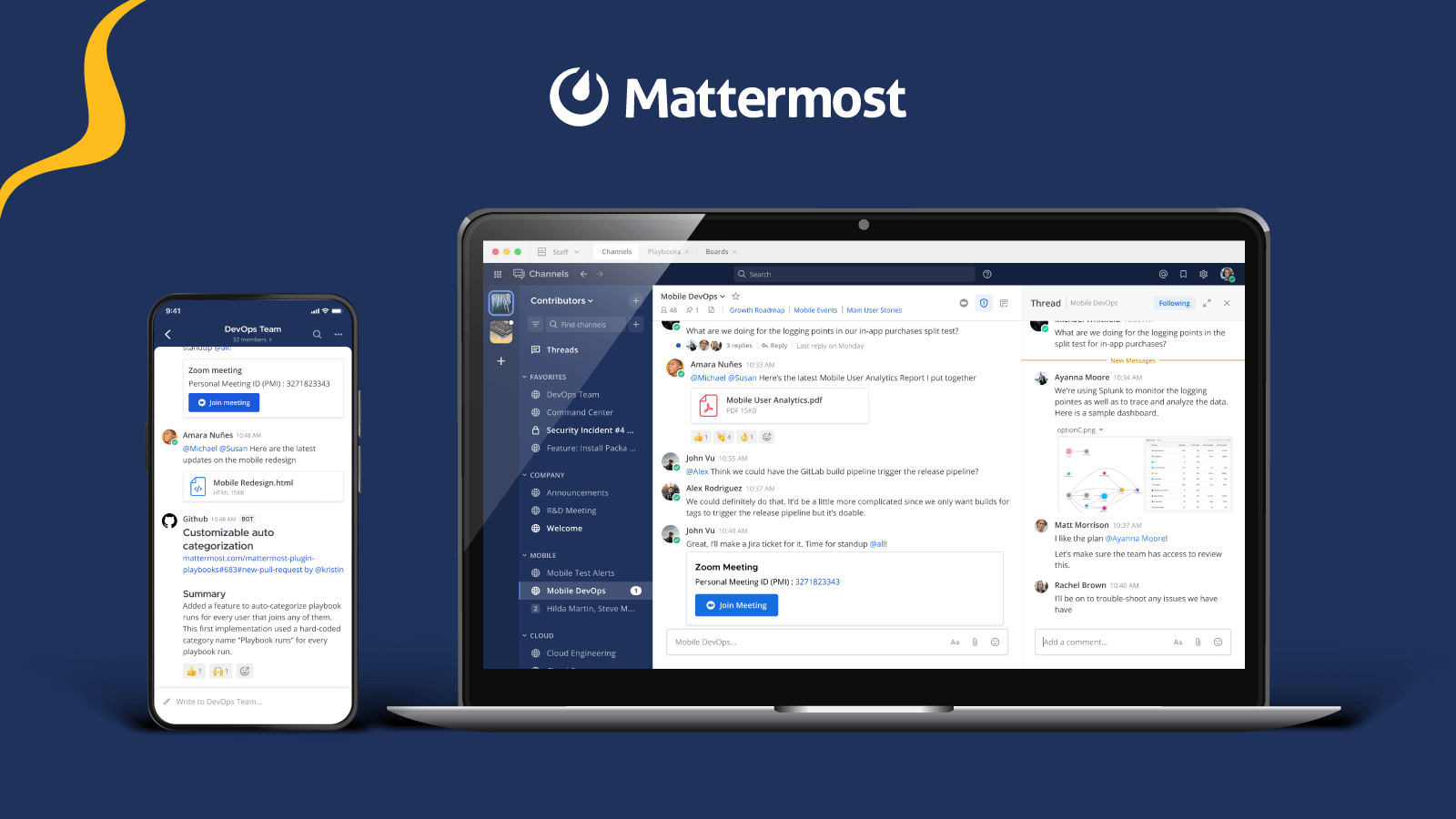
Federated workspaces, where each organization retains control of its own enclave while sharing specific channels with partner forces, without forcing everyone onto the same infrastructure or network.
-
Native language coordination, so partner forces can communicate at operational speed with real-time translation happening in the channel. No post-processing, no separate tool required.
-
Legacy system interoperability, so partner forces on Matrix, XMPP, or other established platforms can stay situationally aware without requiring a full migration before they can participate.
-
Sovereignty-preserving AI that can synthesize mission context for a partner analyst joining mid-operation, with no operational data routed through a commercial cloud.
Most enterprise collaboration platforms were designed for single-organization, single-network use. Adapting them to coalition environments creates exactly the fragmentation they were meant to solve.
This is a pivotal moment
The accelerating pace of Mission Partner Environment (MPE) modernization makes this moment particularly relevant for organizations that haven’t yet addressed their coalition collaboration architecture. As network infrastructure matures — with IMN reaching full operational capability and CJADC2 frameworks coming into focus — the collaboration layer becomes the next critical gap. Organizations that don’t act to ensure their collaboration capabilities are aligned with their coalition’s mission needs are building technical debt into their architecture at the exact same time that coalition mission complexity is increasing, not decreasing.
The question most organizations are asking isn’t whether to replace the communication stack. It’s whether the replacement is designed for their current missions, including coalition operations, multinational task forces, missions that demand real-time coordination across organizational and national lines. Shadow IT isn’t the answer to that question, but it serves as strong evidence that many organizations have yet to adopt a proper solution.
Learn more about how Mattermost supports secure collaboration in mission partner environments.