




In modern defence, readiness isn’t about how much capability you hold; it’s about how quickly you can act.
Why Mean Time to Ready Defines Modern Military Tempo
In practical terms, mean time to ready reflects how fast forces can move from awareness to action, from peacetime posture to operational deployment. Within coalitions, it defines the speed at which intelligence is shared, decisions are made, and actions are coordinated across nations and domains.
Why this matters? Across Europe, defence leaders are recognising a hard truth: the tempo of conflict has changed. Drones, cyberattacks, and AI-driven systems now move at machine speed, collapsing the decision cycles that once defined deterrence.
For NATO and its partners, readiness can no longer be measured by annual exercises or logistics reports. It’s measured in seconds to act, in how quickly a coalition can move from alert to coordination, and from coordination to execution.
President Zelensky’s warning to the United Nations captured this shift: “weapons are evolving faster than our ability to defend ourselves.” The battlespace is now as much digital as physical, and adversaries exploit that gap relentlessly. In this new environment, readiness must mean instant access, instant trust, and instant action across every domain.
Lessons from the Modern Operating Environment
The emerging threat landscape doesn’t respect geography, hierarchy, or traditional chains of command. The same technologies that power commercial innovation, including AI, automation, and connected sensors, are now being repurposed by state and non-state actors alike.
Coalition networks, critical infrastructure, and even public trust are being tested in real time. Information operations blur truth before militaries can respond. Autonomous systems react before human analysts can interpret. Intelligence now travels at the speed of the network, but decisions often do not.
Defence leaders are increasingly clear on what this means: reducing mean time to ready will depend less on mass or range, and more on how fast allies can sense, decide, and act together. AI can accelerate awareness, but it cannot replace command judgment. Human-machine collaboration is therefore becoming the true measure of readiness and the place where the next advantage will be won.
Mean Time to Ready: Operational Tempo as the New Benchmark
In this environment, delay carries a strategic cost. When intelligence takes hours instead of minutes to reach decision-makers, tempo is lost. When collaboration tools falter or authorisations lag, opportunities to act decisively begin to narrow.
Every minute matters, not just tactically, but in how readiness is perceived. Coalitions that act swiftly and in sync project confidence, cohesion, and readiness. Those that pause risk uncertainty, giving adversaries the space to shape the narrative or seize initiative.
Modern readiness is no longer defined by resources alone, but by rhythm: the speed at which partners can sense, decide, and act together.
This is why the question of mean time to ready now sits at the heart of NATO’s modern posture. How quickly can allies share intelligence, coordinate actions, and confirm decisions securely? That measure defines not only responsiveness, but deterrence itself.
The New Standard for NATO and Partners
To reduce mean time to ready, coalitions must integrate secure collaboration, sovereign data control, and AI-enabled decision support into a single, trusted environment.
That means:
- Persistent interoperability — federated collaboration that functions across classifications and partners.
- Sovereign assurance — control over data and infrastructure to maintain trust and independence.
- Human + AI tempo — leveraging AI to anticipate and propose, while commanders decide and act.
- Zero-Trust continuity — resilient systems that maintain security even under degraded conditions.
Speed without sovereignty risks compromise; sovereignty without speed risks irrelevance. The next decade of NATO readiness will depend on achieving both.
Reducing Mean Time to Ready: Lessons for NATO and Partners
Readiness is no longer measured by how well forces plan, but by how fast they can act.
For NATO and its partners, speed is the unifying benchmark that defines deterrence, interoperability, and trust. Mean time to ready is the measurement that matters, not just for individual forces, but for the entire coalition network.
Across recent coalition exercises and live operations, three lessons are emerging:
-
Tempo must be built into command and control.
Modern C2 systems can’t simply collect information. They must enable shared, real-time decision-making across domains, nations, and levels of command. That means secure collaboration platforms capable of sustaining tempo even in DDIL conditions. -
Sovereignty is a strength multiplier.
Nations that maintain control of their data, workflows, and AI decision support accelerate faster than those reliant on non-sovereign systems. Federated collaboration, not centralised dependency, is what ensures continuity across alliances. -
AI must support, not replace, human judgment.
The commander’s intuition, informed by trusted, real-time data, remains decisive. AI can surface insights and automate workflows, but the human decision loop must remain sovereign.
NATO’s advantage will come from its ability to ready, decide, and act faster than its adversaries — because tempo and cohesion, not technology or mass alone, are now the true measures of readiness and deterrence.
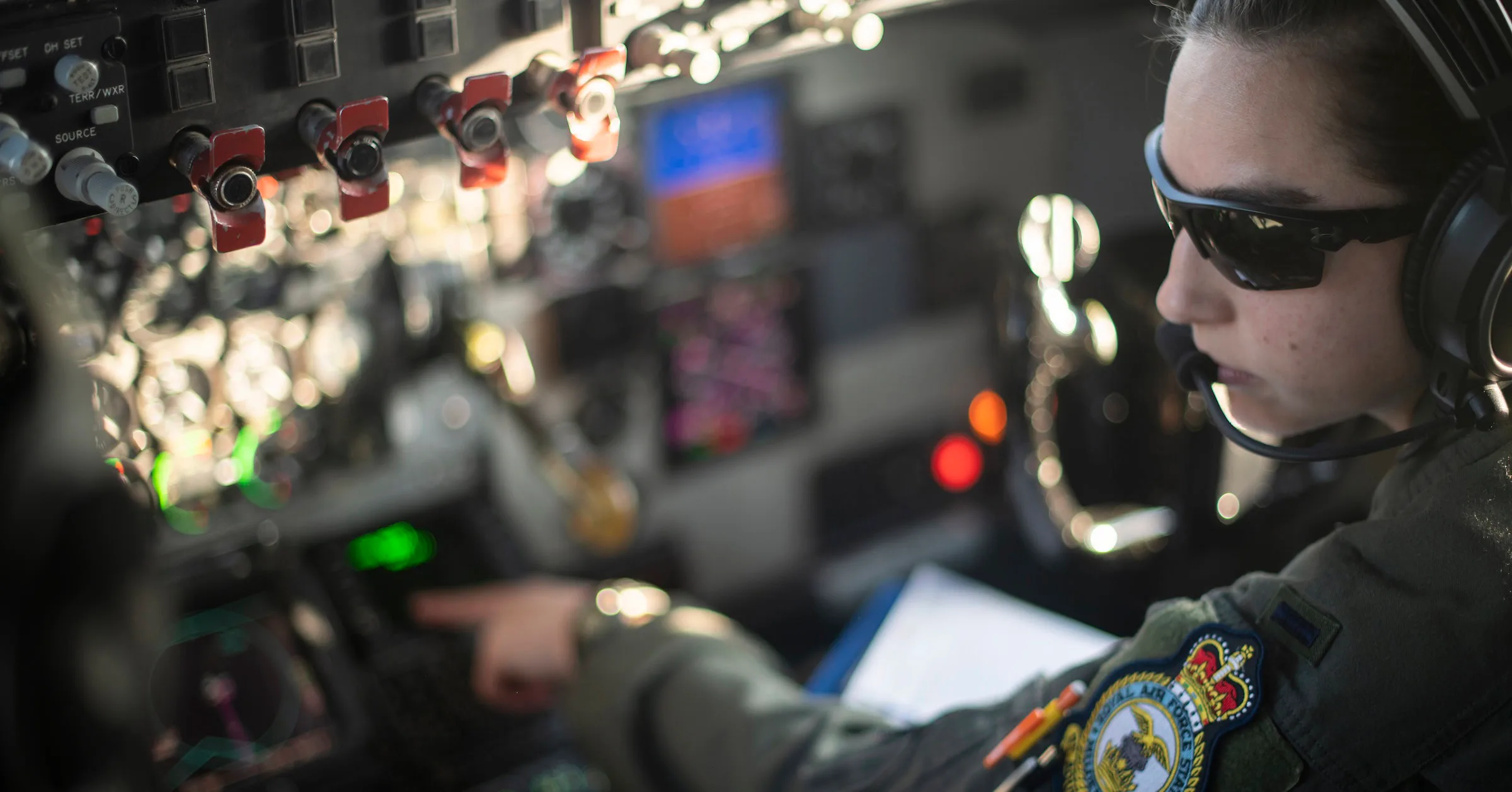
Image Source. The appearance of U.S. Department of Defense (DoD) visual information does not imply or constitute DoD endorsement.