


MPE modernization is solving the infrastructure problem. The collaboration problem requires a different answer.
Mission Tension
Mission Partner Environments (MPEs) were conceived to solve a fundamental challenge in coalition operations: enabling information sharing across commands and partner nations without forcing every participant onto a single unified network.
The architecture was sound. MPEs create shared operational spaces where allied forces can access common situational awareness, exchange operational data, and coordinate across national boundaries — while preserving each nation’s control over its own network and classified information. Adopted across combatant commands and built into the CJADC2 framework, MPEs have become the Department of War’s primary mechanism for enabling coalition information sharing at operational scale.
But as MPE implementations have matured, a persistent challenge has emerged. Network connectivity and operational coordination are not the same thing. Even in well-architected MPEs, the coordination layer — how teams actually work together in real time across those networks — continues to fragment.
Operational Reality of Mission Partner Environments
The Indo-Pacific Mission Network provides a useful illustration. After years of building bespoke bilateral networks to connect individual allied and partner militaries, USINDOPACOM has invested significantly in consolidating this fragmented environment into a single coalition network. The initiative has progressed through major exercises — including Keen Edge and Valiant Shield — and is targeting full operational capability during Pacific Sentry.
The IMN addresses the infrastructure challenge directly. But even as the network consolidates, the commands operating within it face a set of coordination challenges that network architecture alone doesn’t resolve.
Within the IMN environment, USINDOPACOM still coordinates across more than 20 partner nations, each with its own communication norms, language, and operational culture. US Forces Japan and Ministry of Defense personnel need to coordinate at operational speed across a language boundary. Partner forces joining an exercise mid-stream need to reconstruct operational context quickly. New participants need to be brought into shared channels without compromising the security of other coalition enclaves.
These are coordination problems, not network problems. And legacy MPE implementations weren’t designed to solve them.
The pattern repeats across other coalition environments. In special operations, multinational task forces coordinate across US SOF, allied units, and host-nation partners — often on timelines where getting a partner force operational in the shared environment in hours rather than days has direct mission impact. In joint training commands, the exercise environment surfaces the same friction: systems that technically interoperate, but collaboration that continues to fragment across the tools teams actually use.
A New, Emerging Model
The most advanced MPE implementations are beginning to address this. The recognition driving next-generation design is straightforward: sharing information and coordinating in real time are different capabilities, and the latter requires infrastructure designed specifically for federated operation.
Several architectural requirements are emerging as consistent across the organizations furthest ahead on this:
- Federated workspace architecture that gives each organizational enclave control of its own environment while enabling selective, secure sharing with partner forces — without requiring partners to join a common infrastructure.
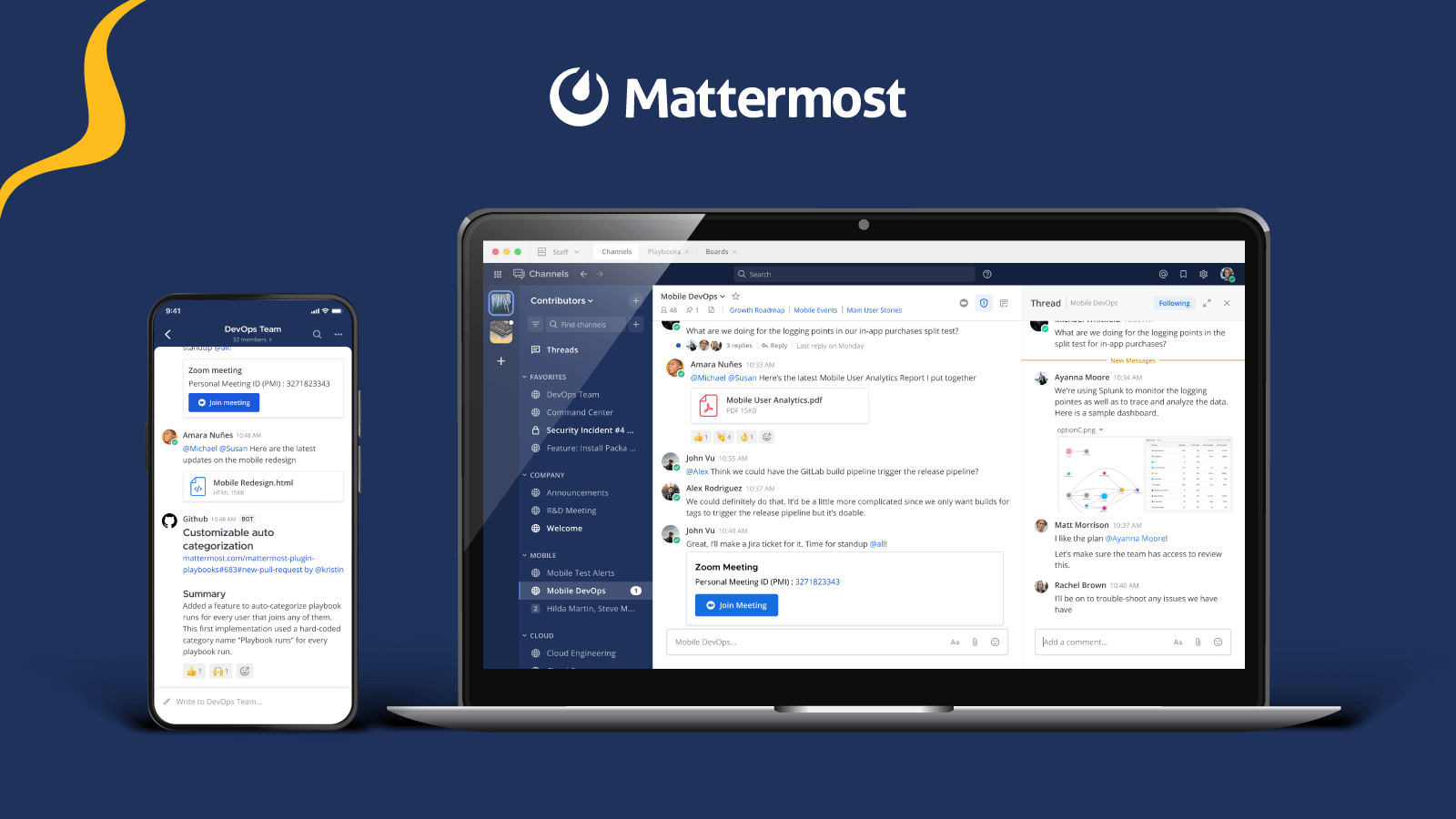
- Real-time language support that enables partner forces to communicate in their native language with automatic translation across the shared channel — preserving operational speed without the friction of manual translation workflows.
- Interoperability with existing systems, including legacy platforms like Matrix and XMPP that partner forces may already be operating, so new participants can be brought in without requiring full platform migration.
- AI-assisted context synthesis that can bring a newly arrived partner analyst up to speed on mission state quickly — using a sovereign, government-controlled model that keeps operational data within the security boundary.
These aren’t features of any single vendor’s platform. They are the architectural requirements of collaboration infrastructure designed for the actual conditions of coalition operations: multiple organizations, multiple languages, multiple classification levels, and the constant pressure of real-time mission execution.
The commands that are defining the next generation of MPE architecture are increasingly explicit that this collaboration layer is where the operational gap lives. Network consolidation is necessary. Coordination infrastructure is what turns a connected coalition into an effective one.
In the next article in this series, we examine what it means to treat collaboration as mission infrastructure — and what that shift requires from the organizations building the next generation of coalition operational environments.