



Key Takeaways
- Regulators now expect automatic, tamper-evident logging of AI system activity, not manual documentation after the fact.
- An AI audit trail differs from standard application logging by capturing model version, prompts, outputs, guardrails, and the human decisions tied to them.
- The EU AI Act’s Article 12 record-keeping requirement took full effect for high-risk systems on August 2, 2026.
- Logging alone doesn’t satisfy auditors; they also expect visible human approval steps before consequential AI actions.
- Traceability depends on keeping AI-assisted actions inside their original operational context, not scattered across side tools.
AI is no longer a pilot project sitting off to the side of enterprise workflows. It drafts responses, triages tickets, and increasingly takes actions inside operational systems.
As AI moves closer to real decisions, regulators, auditors, and boards are asking the same question: can you prove what the AI did, and who approved it?
An AI audit trail is how organizations answer that question.
What Is an AI Audit Trail?
An AI audit trail is a chronological, tamper-evident record of an AI system’s activity, including prompts, outputs, model version, guardrails, and any tool calls or actions it took. It exists so organizations can reconstruct exactly what an AI system did, when, and under whose authorization.
Standard application logs typically capture user actions inside a fixed set of features. In contrast, an AI audit trail has to capture something less predictable: what the model was asked, what it generated, which tools or systems it touched, and whether a human reviewed or approved that action before it took effect.
This last piece is often the gap in AI deployments built primarily for speed rather than accountability.
Why Auditability Is Becoming a Core AI Compliance Requirement
Auditability is shifting from a best practice to a binding regulatory obligation, driven largely by the EU AI Act. For organizations evaluating AI compliance software with built-in audit trails, understanding what drives this requirement matters as much as the tooling itself.
Article 12 requires high-risk AI systems to automatically record events over their lifetime, with full enforcement beginning August 2, 2026.
Article 12 is explicit that manual documentation doesn’t satisfy the requirement. Logging has to happen automatically, capturing events relevant to identifying risk situations, supporting post-market monitoring, and tracking operational performance. For organizations already managing CMMC, FedRAMP, or GDPR obligations, this automatic-logging mandate adds AI-specific record-keeping to an already complex compliance surface.
Voluntary frameworks like the NIST AI Risk Management Framework reinforce the similar expectation for U.S. organizations. This framework approaches the same problem from a governance angle rather than a legal one.
Its Govern, Map, Measure, and Manage functions treat documentation as the mechanism that makes AI risk decisions defensible after the fact. Together, these frameworks point to the same operational requirement: AI activity has to be logged automatically, tied to a human decision-maker, and reviewable on demand.
What a Defensible AI Governance Audit Trail Must Capture
A logging feature alone doesn’t make an AI deployment auditable.
Auditability also depends on whether that logging can be reviewed, trusted, and connected back to a human decision. As a result, regulators and internal compliance teams expect AI audit trails to have the following four elements.
1. Complete Interaction Logging
Every prompt, output, model version, and timestamp needs to be captured automatically, without relying on a person to remember to document it. A complete record includes the actor identity (which user or process triggered the interaction), a session or request ID for correlation, the model version in use, and the full input and output content or a defensible reference to it.
The common failure mode is logging at the application layer only. A system might record that a user opened an AI feature, but miss what the model was actually asked, what tools it called, or what it returned. Gold-standard logging captures the interaction itself rather than merely confirming one occurred, so a reviewer never has to reconstruct intent from surrounding context.
2. Human Approval Before Consequential Actions
An audit trail is far more defensible when it shows a person reviewed an AI-proposed action before it ran, not just that the action occurred.
This requirement means treating consequential AI actions, like tool calls, data writes, or external API requests, as a proposal requiring explicit confirmation rather than something that executes automatically once generated. The strongest implementations tie this back to a defined, assigned-ownership workflow rather than an ad hoc decision made in isolation.
The approval record itself needs the same rigor as the action it’s approving, with information about who approved it, when, and what exactly they saw before deciding. A blanket “auto-approve” configuration might be operationally convenient, but it collapses the audit trail down to the same weak evidence a fully autonomous system would produce.
Regulators and internal auditors specifically look for evidence that the approval step is real and not just cosmetic.
3. End-to-End Traceability
Auditors need to reconstruct not just what the AI did, but why, in the context where the decision was made. Preserving that chain means capturing what prompted the AI’s involvement, what it proposed, what a human approved or modified, and what ultimately happened.
The strongest audit trails keep this chain intact in one place, attached to the conversation or workflow where the action originated. Scattering it across a model-provider log, an application log, and a separate approval system forces a reviewer to manually stitch the pieces back together, potentially across systems owned by different groups with varying practices and policies.
When an incident or audit requires replaying a decision, fragmented logs slow investigation and create room for gaps or inconsistencies between systems that were never designed to reconcile.
4. Governance Review on a Defined Cadence
An audit trail nobody reviews provides no real oversight value. Regular examination is what turns records into a functioning control. Compliance teams need a way to pull and examine AI-related activity on a schedule, not just when an incident forces the question.
In practice, this means scheduled, filterable exports of AI activity built for the audiences who need them: internal auditors, external regulators, or a board risk committee, rather than raw logs meant for engineers.
This is also where governance review differs from observability monitoring. Observability catches performance problems in real time, while governance review is a periodic, deliberate look at whether AI activity, approvals, and outcomes stayed within policy over a defined window.
How Mattermost Brings Auditability Into Everyday Work
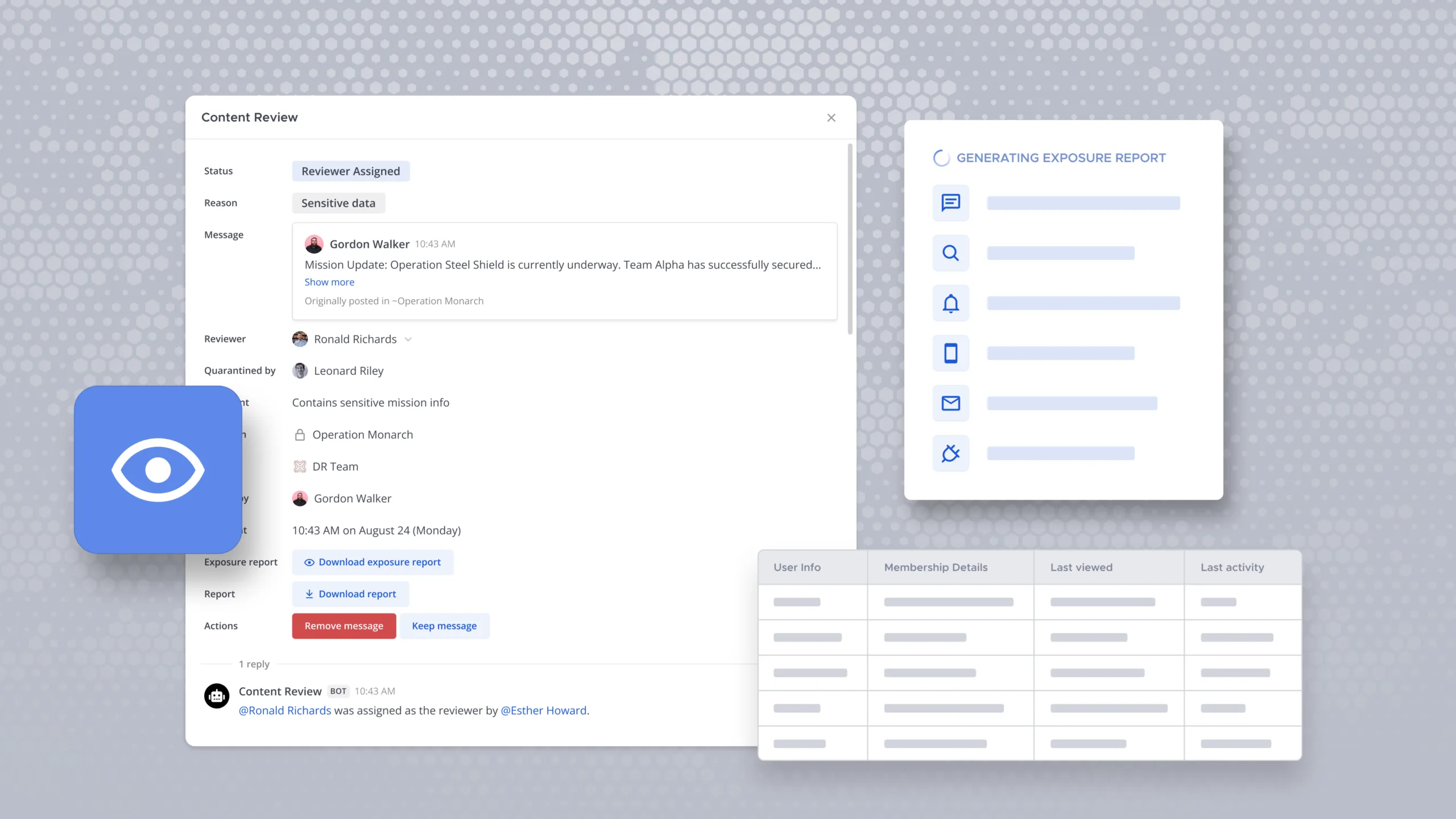
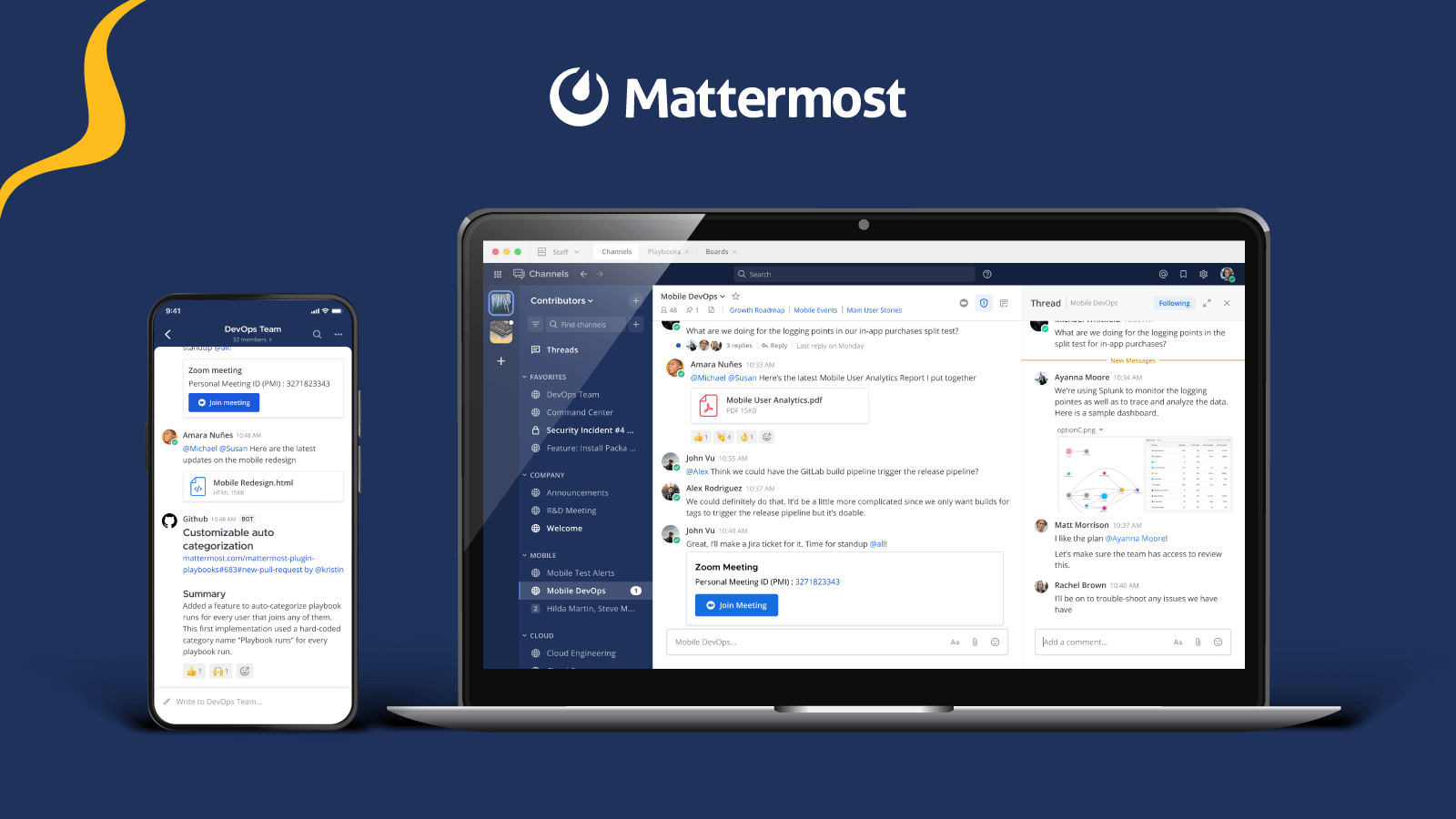
Mattermost, a secure collaboration platform for mission-critical work, brings AI-assisted work into the same platform and channels where teams already operate, so audit trails don’t require a separate system to maintain. AI interactions and tool-call approvals are logged automatically alongside the surrounding conversation. Compliance teams can also pull scheduled, filterable exports of that activity for review, all without exporting AI activity into a disconnected system after the fact.
Learn more about Mattermost Agents and audit logging and compliance export. If you’d like to see our secure collaboration platform in action, please sign up for an interactive demo.